Another fine trip – perfect weather, cycling and history – a great combination!
Author: Richard Hancock

More Spencer Ernest Parkes
I am grateful to Jackie van Bergen of Ku-ring-gai Historical Society, khs.org.au, for sending me information about Sydney Parkes.
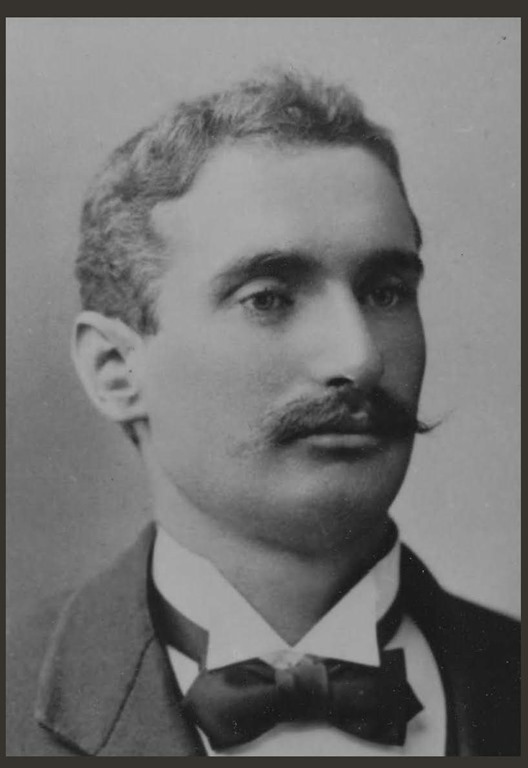
First of all a very fine fine photograph of him. This came from Ancestry and credit to “pmacks1” – I’d be interested in getting in touch.
Secondly his conscription poem.

Sydney Ernest Parkes
I am pleased to have found a picture of Sydney from RSL Virtual War Memorial. I am obliged to Mark Tucker for directing me there. A photograph adds so much to the character. He looks much like I have imagined him – a tough professional soldier!
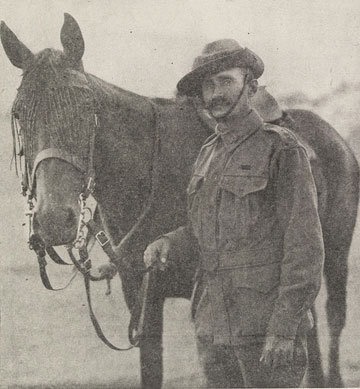
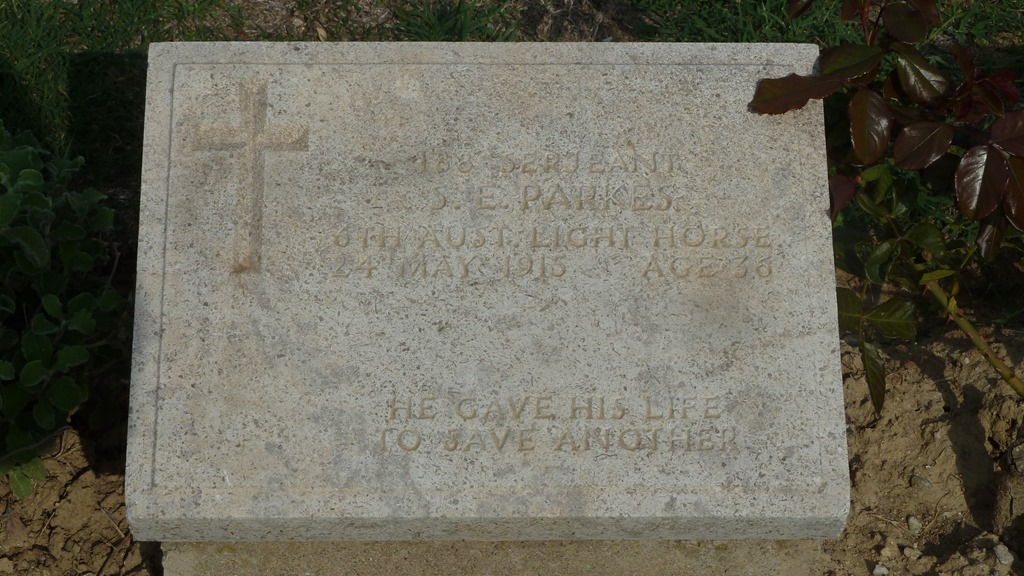
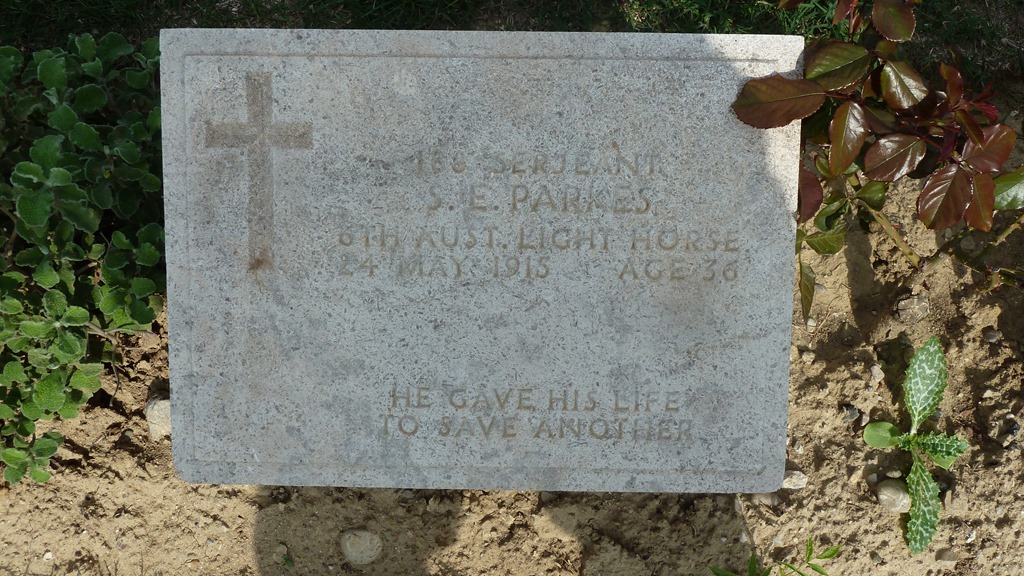
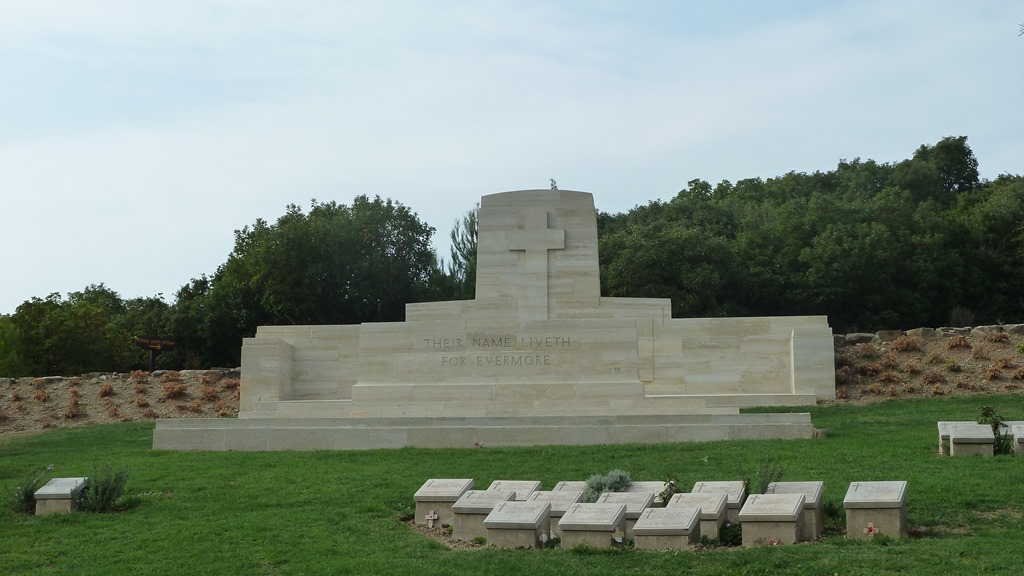
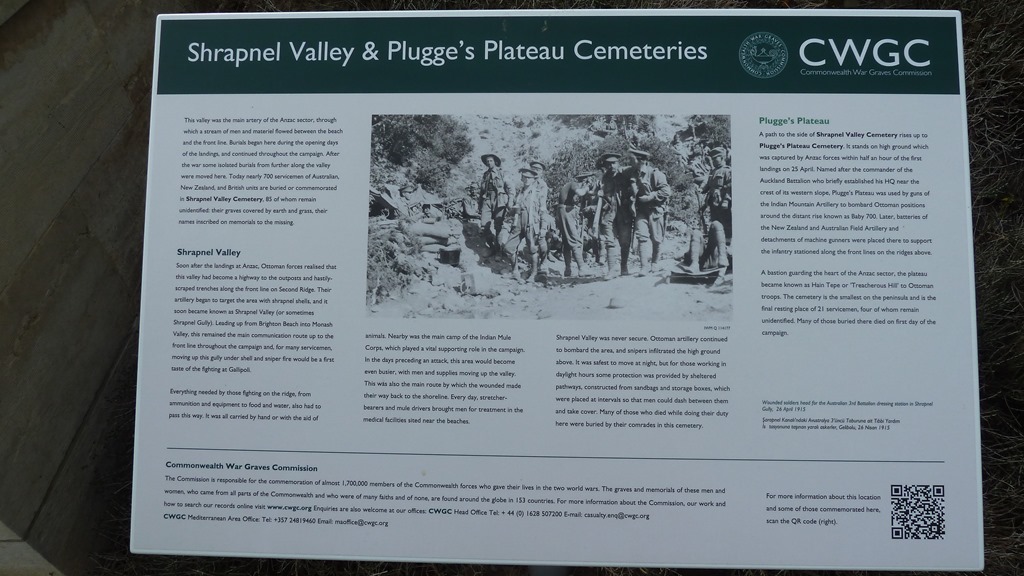
Sydney Ernest Parkes – his final resting place
I was pleased to bring another Parkes research to a conclusion. This time it was Sydney Ernest, who is buried in Shrapnel Valley, ANZAC. (More pictures below.)
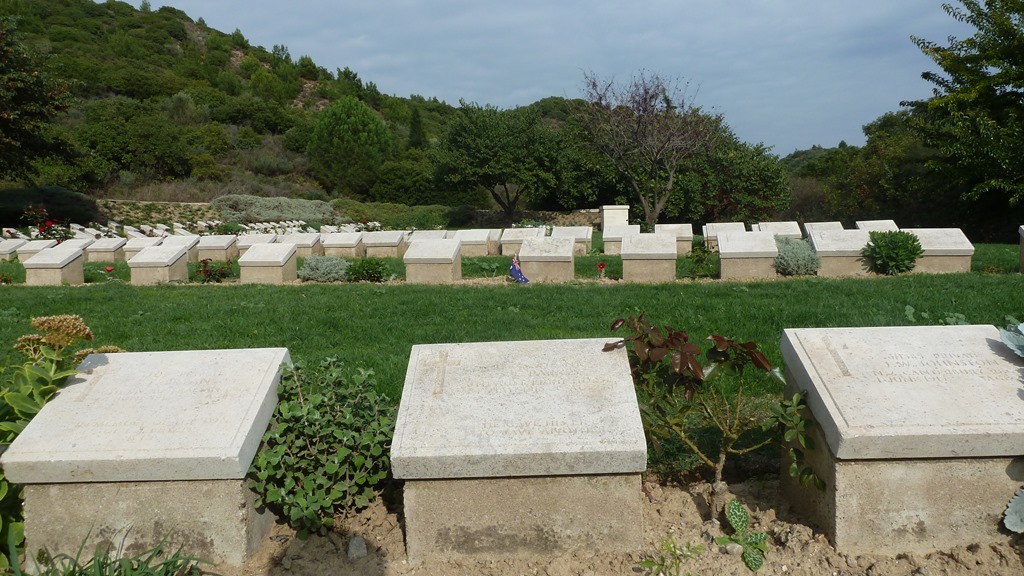
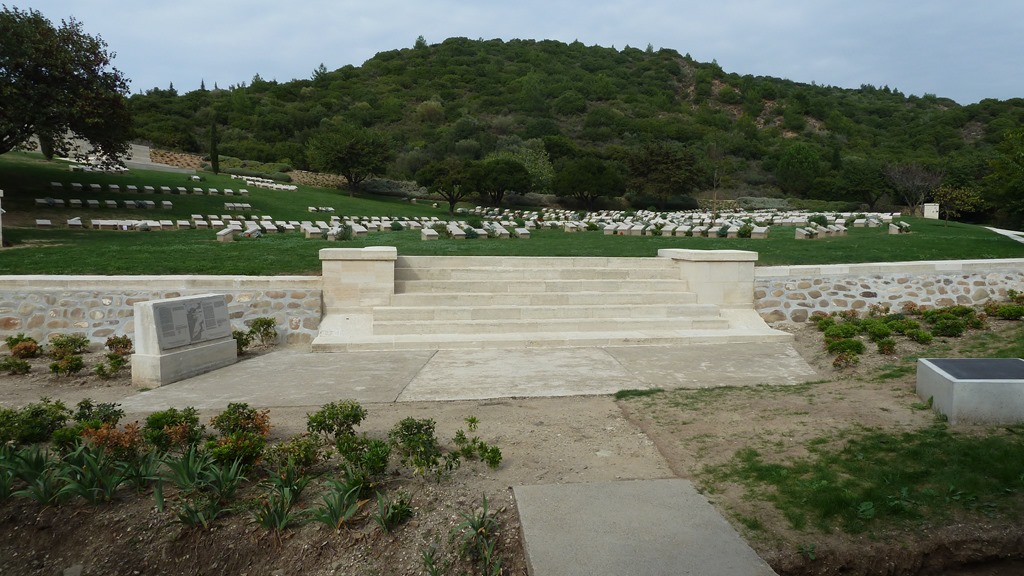
He was a regular soldier and highly regarded:
Quote from TROOPER BLUEGUM AT THE DARDANELLES by Oliver Hogue
Sid Parkes was small and slight, so small that he was almost rejected by the medical examiner. He had to show his South African record, and remind the doctor that giants were not wanted in the Light Horse, but light, active, wiry horse- men. So he just scraped through and went into camp. I remember him at Rosebery Park. Not much over five feet three, only about nine stone, but active and strong. He knew his mounted drill like a book, and he knew how to handle men; so he soon got his three stripes — and stuck to them. The men liked him. The officers appreciated him. We saw several other sergeants made and unmade, but Parkes of B Squadron was a fixture.
Already he had seen four years’ peace service, and eighteen months’ active service in South Africa with the New South Wales Mounted Rifles. So he brought the lessons of his previous experience to bear on his new job. On parade he did his duty well. Off duty he was a humourist, and as care-free as a schoolboy. On the transport he entered into all the fun going. In Egypt he played the game. Somehow, I always thought Parkes would come safely through the war. We joked together the night we first went into the trenches, never anticipating ill. Yet he was the first man of the regiment killed in the trenches. A sniper’s bullet came through a loophole and killed him on the spot.
Suvla Bay, Kidney Hill, Hill 60
I have recently returned from a trip to Gallipoli to re-trace Malcolm Hancock’s footsteps with 1/4the Northamptonshire. Below is a selection of photographs to show where he had been.
Suvla Bay “A” Beach – where he landed 15/10/1915. It was a wet and windy day when I visited.
![Suvla Point A Beach & wreck of lighter 21-10-15 (1)_thumb[3]](/Users/RHancock/AppData/Local/Temp/WindowsLiveWriter1286139640/supfilesD0BF9EC/Suvla Point A Beach & wreck of lighter 21-10-15 (1)[6].jpg "Suvla Point A Beach & wreck of lighter 21-10-15 (1)_thumb[3]")
Remains of a Lighter at “A” Beach
![Suvla Point A Beach & wreck of lighter 21-10-15 (2)_thumb[1]](/Users/RHancock/AppData/Local/Temp/WindowsLiveWriter1286139640/supfilesD0BF9EC/Suvla Point A Beach & wreck of lighter 21-10-15 (2)[4].jpg "Suvla Point A Beach & wreck of lighter 21-10-15 (2)_thumb[1]")
The area around Kidney Hill where Malcolm won his MC on 16th August 1915, less than 24 hours after landing. It was even wetter and windier than at “A” Beach!
![Suvla Kidney Hill & area 21-10-15 (1)_thumb[2]](https://thesomme.blog/wp-content/uploads/2015/10/suvla-kidney-hill-area-21-10-15-1_thumb2.jpg "Suvla Kidney Hill & area 21-10-15 (1)_thumb[2]")
![Suvla Kidney Hill & area 21-10-15 (2)_thumb[1]](/Users/RHancock/AppData/Local/Temp/WindowsLiveWriter1286139640/supfilesD0BF9EC/Suvla Kidney Hill & area 21-10-15 (2)[4].jpg "Suvla Kidney Hill & area 21-10-15 (2)_thumb[1]")
![Suvla Kidney Hill & area 21-10-15 (3)_thumb[1]](/Users/RHancock/AppData/Local/Temp/WindowsLiveWriter1286139640/supfilesD0BF9EC/Suvla Kidney Hill & area 21-10-15 (3)[4].jpg "Suvla Kidney Hill & area 21-10-15 (3)_thumb[1]")
![Suvla Kidney Hill & area 21-10-15 (4)_thumb[1]](/Users/RHancock/AppData/Local/Temp/WindowsLiveWriter1286139640/supfilesD0BF9EC/Suvla Kidney Hill & area 21-10-15 (4)[4].jpg "Suvla Kidney Hill & area 21-10-15 (4)_thumb[1]")
![Suvla Kidney Hill & area 21-10-15 (5)_thumb[1]](/Users/RHancock/AppData/Local/Temp/WindowsLiveWriter1286139640/supfilesD0BF9EC/Suvla Kidney Hill & area 21-10-15 (5)[4].jpg "Suvla Kidney Hill & area 21-10-15 (5)_thumb[1]")
Hill 60 where he was holding the trenches and bombing officer for the Brigade.
![Hill 60 21-10-15 (6)_thumb[2]](https://thesomme.blog/wp-content/uploads/2015/10/hill-60-21-10-15-6_thumb2.jpg "Hill 60 21-10-15 (6)_thumb[2]")
![Hill 60 2015-10-21 (1)_thumb[2]](https://thesomme.blog/wp-content/uploads/2015/10/hill-60-2015-10-21-1_thumb2.jpg "Hill 60 2015-10-21 (1)_thumb[2]")
Views from Hill 60.
![Hill 60 2015-10-21 (4)_thumb[2]](https://thesomme.blog/wp-content/uploads/2015/10/hill-60-2015-10-21-4_thumb2.jpg "Hill 60 2015-10-21 (4)_thumb[2]")
![Hill 60 2015-10-21 (5)_thumb[1]](/Users/RHancock/AppData/Local/Temp/WindowsLiveWriter1286139640/supfilesD0BF9EC/Hill 60 2015-10-21 (5)[3].jpg "Hill 60 2015-10-21 (5)_thumb[1]")
Saving Private Rideout–100 years ago
August 16th 1915
100 years ago today Malcolm Hancock carried the wounded John Rideout back to safety on his soldiers in full view of the Turks.
In Malcolm Hancock’s words from IWM tapes:
Anyway, we advanced there, we took up a position and lay down. One of my Corporals was at that moment wounded and he was pretty bad and I sent for stretcher bearers. After a little time, stretcher bearers came along and they got him away. Now one of them stayed with me, he was a young boy whose name was Rideout I remember, he was one of my Platoon, and he was standing next to me, he was only a yard away from me I suppose, when suddenly he was shot through both legs and . . . this was a rifle, must have been a rifle bullet . . . and it sounded just like the crack of a whip like that [makes cracking sound!] and it went through both his legs and of course he fell down. Well, I thought I’d better get down too, which I did, and when I recovered myself a bit I thought well this doesn’t seem to be much good and at that moment, fortunately, we were recalled by our Company Commander because it was obviously an untenable position and we were recalled back over the ridge which we had just gone over. This boy couldn’t do anything, couldn’t move, couldn’t stand, couldn’t do anything. So I somehow or other rather like a fireman putting someone over their shoulders managed to get him on my back and I got him away. Now I can’t help feeling that at that moment when I took him down we must have been in full view of some enemy. If he had been shot on that spot why wasn’t I? And that’s why I think it that was one that the reasons that the Turk fought fair.
From John Rideout’s memories:
After a night out in the open the battalion moved forward at first light to a position called Kidney Hill, and although under continuous fire could not define any enemy positions. My company (‘A’) was in the lead when a Lance Corporal of number 2 platoon was seriously wounded in the back .The platoon commander (my Platoon) a Lt Hancock immediately went to his aid and called for stretcher bearers, “Off you go Rideout”, so myself and others went forward amidst whining bullets carrying a stretcher. No sooner had we reached them when I felt a searing pain, and down I went, Lt Hancock organized the other men to load the wounded man on to the stretcher and take him back to our lines, he then hoisted me onto his back and despite being in full view of the Turkish lines made it back to our rear position.
For this deed Lt Hancock was awarded the Military Cross, a more detailed account of this action is held at the Imperial War Museum under the diaries of Lt Hancock.
The full story is related here: https://thesomme.wordpress.com/malcolm-hancock/malcolm-hancock-john-rideout/
1/4 Northants land at Suvla Bay –100 years ago
15 August 1915
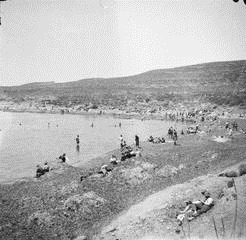
“A” Beach Suvla Bay August 1915 Picture IWM
In the words of Malcolm Hancock from IWM tapes:
Q: Could you tell me what happened next?
Well we got going on these two destroyers the names of which I’ve forgotten, about half the Battalion on each destroyer and after we had been going some time and we were approaching land, we could see the high ground of the peninsula we then became aware of the gunfire which was quite intense. We got a bit further and could see the puffs of smoke where the shells landed and just about then, I for one, wondered whether I had perhaps been a little hasty and little bit over enthusiastic doing what I thought was my job. It soon passed because our minds were then, or at least mine was, fixed on the fact that we were about to land on a beach in Gallipoli and we just didn’t know what on earth to expect. We might have got onto a beach that was mined might have had machine guns firing at us, barbed wire, God knows what. Anyway.
Q: Did you know which beach you were heading for?
It was “A” Beach. That we knew, we had been given orders, the ships had been given orders to land us at “A” Beach.
Q Suvla Bay?
Suvla Bay, that’s right. When the destroyers got fairly close inland we then transferred into their boats and we were rowed ashore and we got onto the beach. As it happened we met no resistance at all. In fact there was an officer on the beach who directed the commanding officer to form us up and get us away from the beach and a little bit inland. Now the beach was, I suppose, about two or three hundred yards long and from the water level up to where the little old sand hills were a matter of thirty or forty yards perhaps. Anyway we all scrambled out onto the beach we got up onto the sand dunes just above and there the commanding officer told us to form up in some sort of order and wait while he tried to find out what we were expected to do.
Q: Can just ask you how you got from the destroyers to the beach?
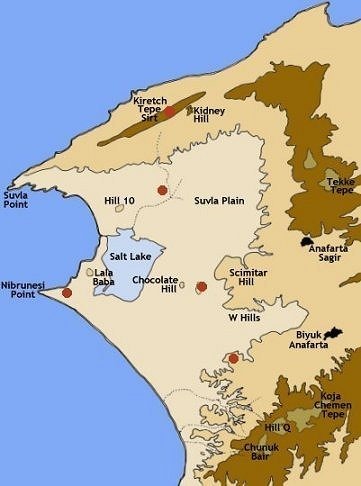
Yes on the destroyers’ boats. It took a little time and mercifully we were not met by any resistance from the enemy. We weren’t to know that at the time, we didn’t know what troops had gone in before us. The line had pushed forward a few hundred yards perhaps a mile beyond the beach, the original landing. Anyway, we formed up there, we waited I suppose for an hour or two doing absolutely nothing. Then the CO came back, he told us to form up, which we did, and he said we were to advance up the Kiretch Tipe. Now that is a range of hills running to our left as we landed on the beach. This range of hills went inland from the beach up to some fairly high ground called the Kiretch and we were ordered to go up there and, presumably, to reinforce what troops were already there. I don’t remember seeing any other units either on our left or on our right we seemed to be by ourselves but we were so busy getting away from the beach and getting up to where we were told to go we hadn’t got much time to notice. But what we did notice and what gave us a terrible shock at the time was a number of the Bedfordshire Regiment coming back from KT where they’d been fighting and they were streaming back, they were all of them wounded in some way or another, I don’t mean the whole Battalion but all those we met were either wounded or dying and it was a bit of a shock to us to say the least of it. Anyway we pressed on and we got up some hundreds of yards inland up this slope. We could still hear the fire and the general sound of guns, rifle fire mostly over to our right which was on the ANZAC side and we then took up a position which was, we hoped, out of sight and possibly out of rifle fire. And there we had to stay while again the CO had to get orders from, presumably, from the Brigade HQ. But the unit seemed so gathered that I’m not quite sure what information he was able to gather. Anyway he stayed at that, the point we’d reached we stayed there that night and I can well remember hearing the mostly rifle fire, bullets going over our heads it seemed to be all night. (07:10) And I must say we didn’t feel all that safe, anyway the night passed.
Q: Could I just ask you, this first day, there seems to have been an absolute breakdown in communications. Would you say this was a fair comment?
I think very fair comment, there didn’t seem to be any communication except what one could find out either by the CO going himself to find the BHQ, whether he ever did or not I don’t know, or sending a runner because there was no question of picking up a telephone saying ‘Hello, is that HQ?’ Those sort of communications didn’t exist. And that was what made it so frustrating to us, we didn’t seem to have any objective, we weren’t told anything definite we just waited for what the CO could find out and tell us to do.
From other sources:
At 04:00 the next day the men were roused and breakfast was served. The remainder of the days ration was issued to be taken in the haversacks. At 08:00 the two Beagle class destroyers HMS Scourge and HMS Foxhound of the 5th Mediterranean flotilla, came alongside and the men crowded onto the decks for the three hour crossing to Suvla. The officers were given beer, sandwiches and cigars by the ship’s officers who thoughtfully provided each with a box of matches.

HMS Scourge Picture: IWM
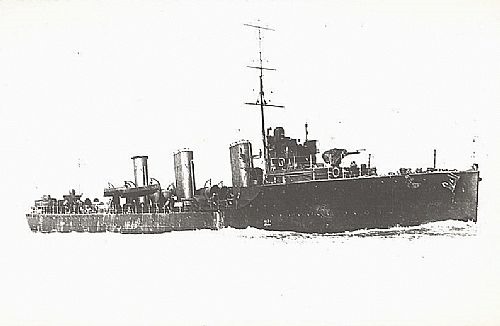
HMS Foxhound
The plain and the beach were thought to be undefended, and the initial intention was to launch a rapid assault from the sea to capture the surrounding hills. This would give a great strategic advantage and could be accomplished with few casualties. However, the plan was gradually scaled down from a major strategic operation to the consolidation of a beach head for further operations. The initial landings were made on the night of 6-7 August, and by the time that the men of the Northamptonshire Regiment landed over a week later there was no rapid movement inland and no strategic initiative at stake.
The landing at the improvised jetty on "A" Beach was made from the ships’ boats and lighters and covered by the fire of two monitors, M32 and M33, and the Battleship HMS Swiftsure.
The disembarkation of twenty eight officers and nine hundred and thirteen men began at noon, but took well into the afternoon to complete. The men were collected by company about half a mile inland where they piled arms and were allowed to take off their equipment. Sea bathing was permitted, and several men were incapacitated by treading on the small black sea urchins which infested the shallow water. At 16:00 orders came to fall in and at 17:00 the battalion was moved towards Kiretch Tepe in support of the Bedfordshire regiment who had taken heavy casualties in their opening action. The move involved an advance under small arms and shrapnel fire over country covered with rocks and thorn scrub which impeded progress without offering cover. The support trenches, which were little more than shallow scrapings in the broken ground, were reached at 20:00. At 21:30 the battalion reinforced the 1st/4th Essex Regiment and was formally attached to the 163rd Brigade
 The Somme
[4].jpg)
[4].jpg)
[3].jpg)
[3].jpg)