This morning, at 7.30am on 5th January, 1917, Edwin Dyett was shot at dawn, at St Firmin, France.
Edwin Dyett’s final letter home
100 years ago today, Sub. Lt. Edwin Dyett discovered that he was to be shot at dawn. He was playing cards when the contents of a blue envelope – his Death Warrant – was read to him. He spent an hour with a Padre and found the strength to write this one last letter:

France, January 4, 1917
Dearest Mother Mine,
I hope by now that you will have had the news. Dearest, I am leaving now because He has willed it. My sorrow tonight is for the trouble I have caused you and dad.
Please excuse any mistakes, but if it were not for the kind support of the Rev. W.C. _____ who is with me tonight, I should not be able to write myself. I should like you to write to him, as he has been my friend.
I am leaving all my effects to you, dearest; will you give my little _____ half the sum you have of mine?
Give dear dad my love and wish him luck. I feel for you so much and I am sorry for bringing dishonour upon you all. Give _____ my love. She will, I expect, understand – and give her back the presents, photos, cards, etc., she has sent me, poor girl.
So now my dearest Mother, I must close. May God bless and protect you all and for evermore. Amen
—
He was shot at 7.30am 5/1/17 at St Firmin. It is reported that his final words were: “For God’s sake shoot straight.”
It is moving story and I have been moved revisiting it today. Many years ago I followed Dyett’s footsteps as closely as possible from desertion to death. For the full story I recommend Leonard Sellers’ book also called “For God’s sake shoot straight.”
The King’s Private Army
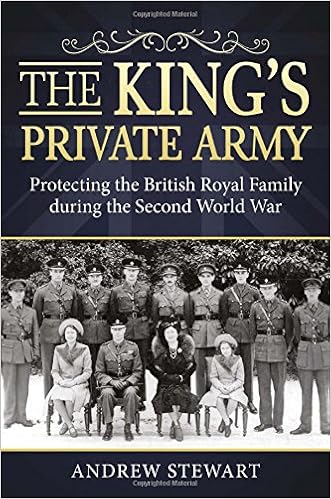
I recommend this book by Andrew Stewart for those interested in the Coats Mission. My Grandfather is back row, third from the left.
Cenotaph 13.11.16 Part 2
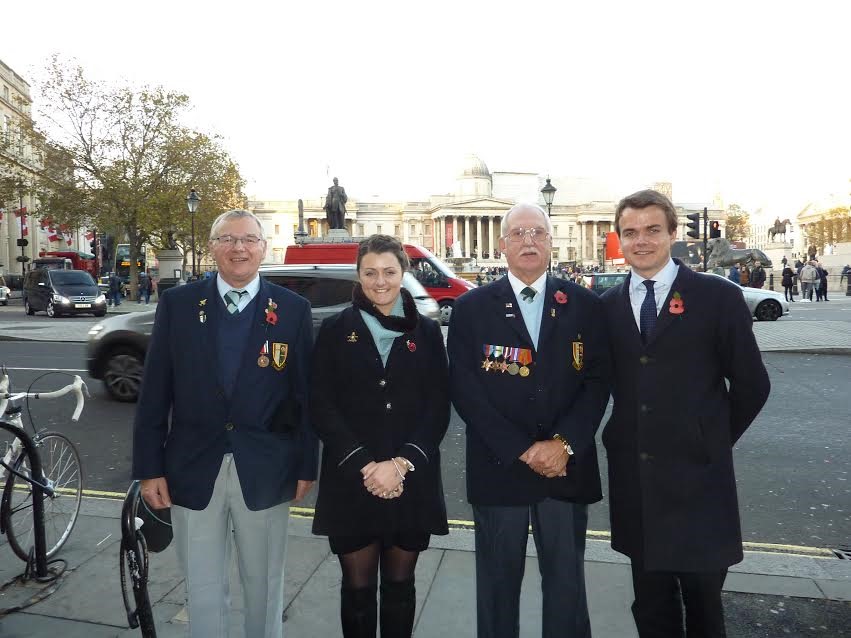
From the left, Tony Harris, Polly Hancock, Malcolm Harris and Charlie Hancock. Grandchildren of Malcolm Hancock and John Rideout. See https://thesomme.wordpress.com/malcolm-hancock/malcolm-hancock-john-rideout/ for the full amazing story.
Cenotaph 13.11.16

British Resistance marchers today. Cousins Charlie Hancock, left, and Polly, centre, representing our Grandfather, Malcolm Hancock MC. See other pages to read about his remarkable military career in both wars.
Picture: British Resistance Archive.
Eric Walter Hare and Repatriation 1942
I am indebted to Ian McLelland for supplying the information below about my Grandfather, Eric Walter Hare and his experience of being repatriated in WW2.
The first – and what became the only – Anglo-Japanese civilian exchange was held at Lourenço Marques in September 1942. On this occasion, around 1,800 Japanese were exchanged for a similar number of Allied government officials and civilians. Among those exchanged were 833 Japanese officials and civilians, including men, women and children, transferred from Australia. The overwhelming majority of the repatriates from Australia had been interned in Australia on behalf of other governments.
In 1942 the British and Japanese governments organised a prisoner exchange via the Portuguese East African port of Laurenco Marques.
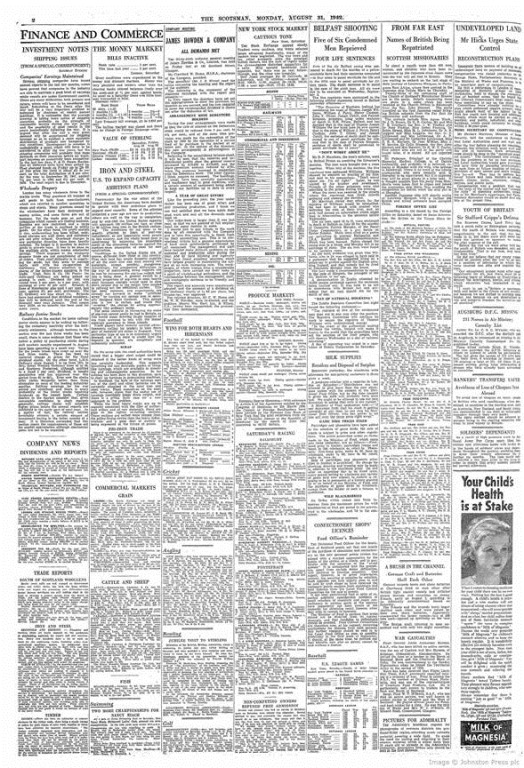
One of the press clippings names E W Hare as one of those internees that was repatriated. (In this he was immensely fortunate as this was the only exchange of the war as far as the British/Japanese were concerned at least.)
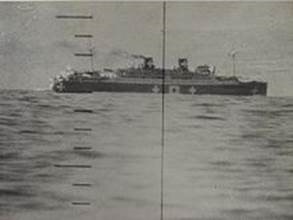
The ship that brought him back was the NYK liner Tatatu Maru, which was spotted by an American submarine SS Kingfisher) that took a photo of the ship through the periscope, but didn’t attack because it was wearing colours identifying itself as a repatriation ship. I have attached this as well.
The majority of the British internees transferred to ships sailing for the UK, however some trying to return to India, Australia and NZ took months to get back as no formal arrangements had been made for them.
There is a book called ‘Lifeline Across the Sea’ by David J Williams which has a short chapter on this voyage.
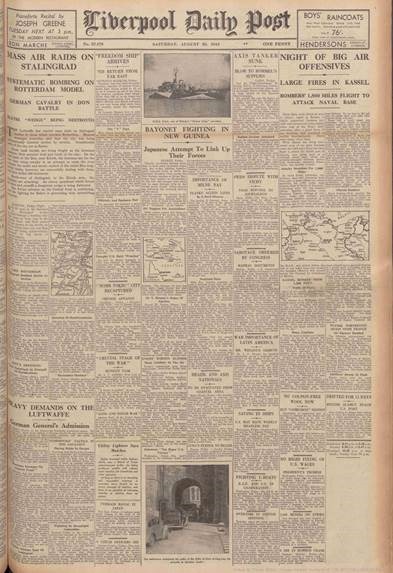
Documents state that he arrived in Avonmouth from Sydney on the 28/9/1944, long before the Japanese surrender and that he was resident in Australia.
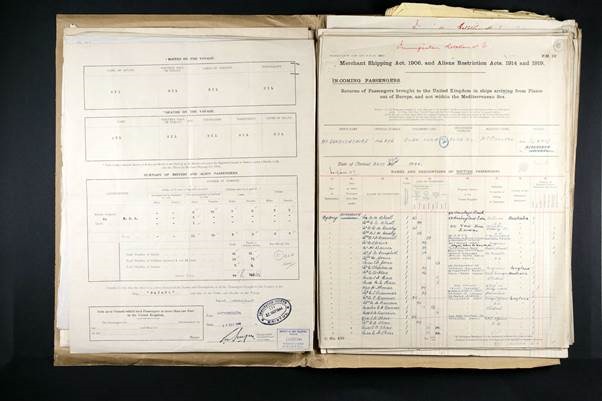
He then sailed out to New York on his way to Manila, Philippines on the 2/4/1945. The latter is certainly correct as Manila had just been liberated by US Forces.
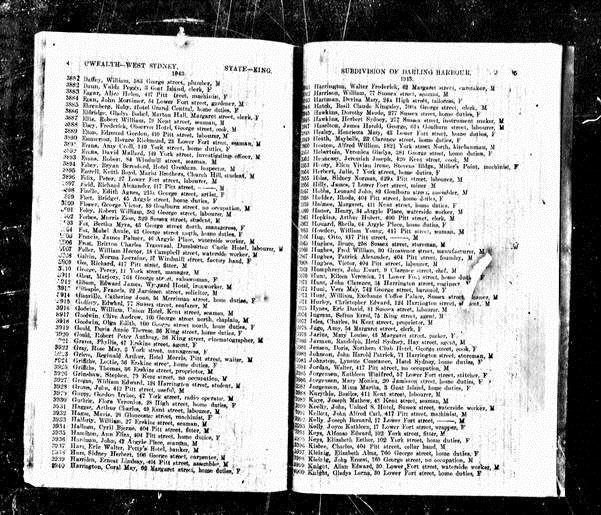
This ties in with the electoral roll for Sydney in 1943 in which Eric Hare is listed .
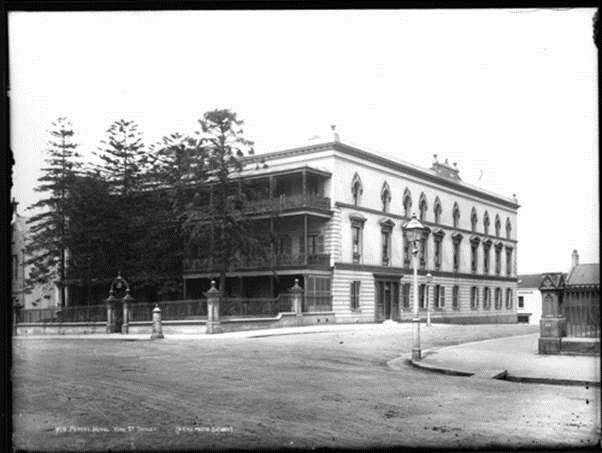
Below is Petty’s Hotel, Sydney where he was living.
Yet more on Sidney Ernest Parkes
Contact with various parties in Australia continues to unearth more information about Sid.
First his WW1 Service Medal, The 1914-1915 Star, I believe, has appeared. Apparently, it was handed by a person who attended the 2014 ANZAC Day parade in Toodyay. This person was unknown and nobody got his name. At that time he claims he found them on a tip in the Perth Metro area, and he didn’t wish to see them go to land fill.
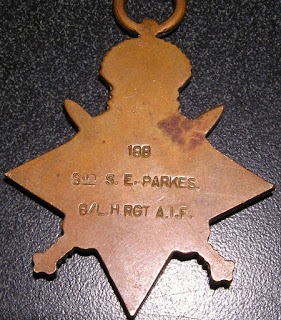
Picture from Lost Medals Australia.
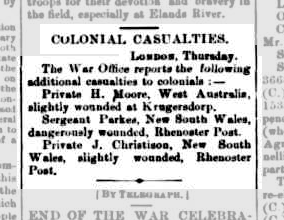
Also a Prior to his WWI service, he fought in the Boer War with the 1st NSW Mounted Rifles. He was wounded in action which reported in the papers at the time.
 The Somme